The gaming industry is entering a new phase in 2026, and Nintendo is once again redefining how players access and purchase games. With the arrival of the Nintendo Switch 2, one of the most noticeable shifts is the growing price gap between digital and physical games.
For years, gamers have debated whether physical copies are better than digital downloads. But now, the conversation is changing. Instead of focusing only on ownership or convenience, players are asking a more practical question: why are digital games becoming cheaper—and how can I take advantage of it?
For Indian gamers in particular, this shift is even more important. Between international pricing, import costs, and payment limitations, understanding Nintendo’s pricing strategy can help you save significantly on your gaming expenses.
In this detailed guide, we’ll break down exactly how Nintendo’s pricing model works in 2026, why digital games are now cheaper than physical copies, and how you can use smart strategies—including gift cards—to maximize savings.
The Evolution of Nintendo Game Pricing
To understand what’s happening today, it’s important to look at how game pricing has evolved over time.
The Physical Era
In the early days of gaming, every game was sold physically. Whether it was cartridges or discs, the entire distribution system depended on physical production.
- Manufacturing cartridges or Blu-ray discs
- Packaging and branding
- Shipping and logistics
- Retail store margins
All of these costs were built into the final price that consumers paid.
The Rise of Digital Distribution
With the introduction of online stores like the Nintendo eShop, things began to change. Developers could now distribute games directly to users without relying on physical infrastructure.
Initially, digital prices were similar to physical ones. But over time, the cost advantages of digital distribution started to influence pricing strategies.
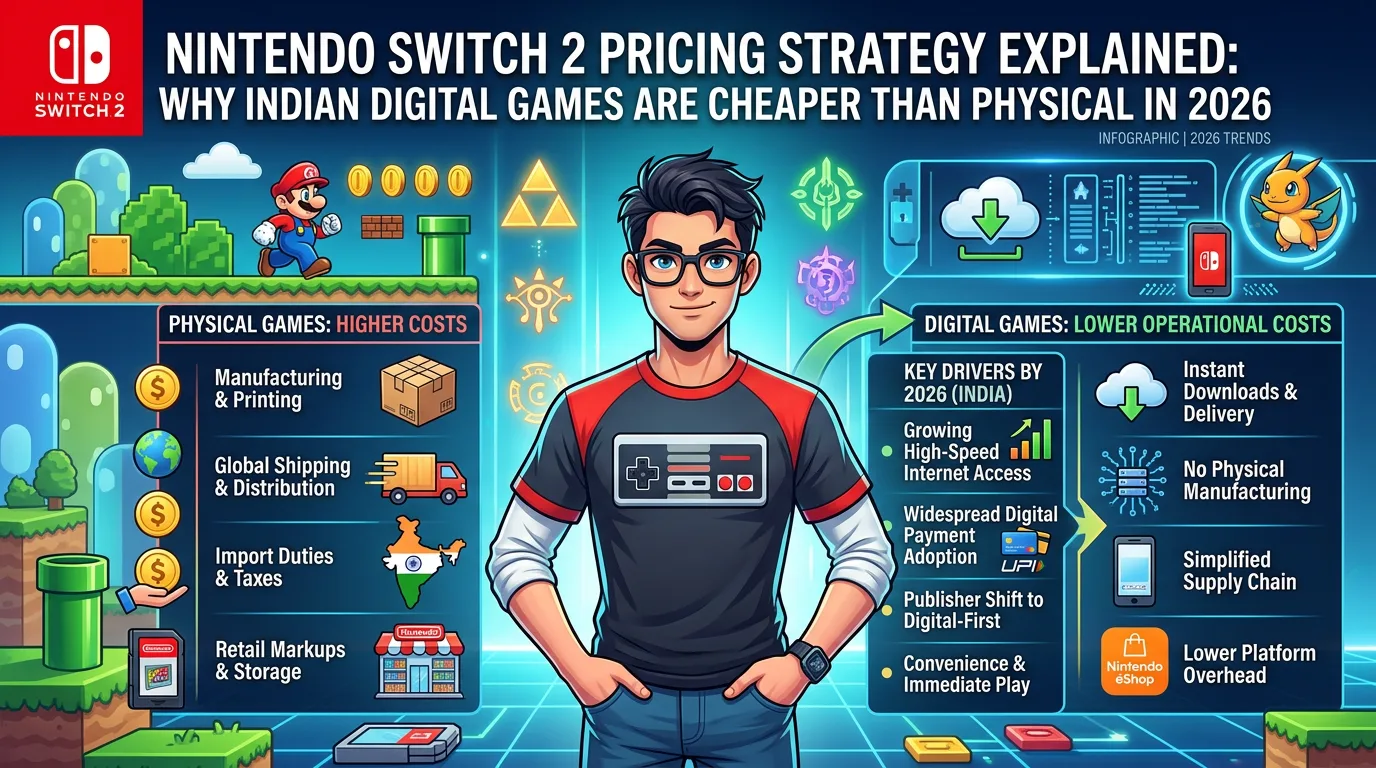
Why Digital Nintendo Games Are Cheaper in 2026
1. Zero Manufacturing Costs
Digital games don’t require cartridges, packaging, or shipping. This eliminates a significant portion of production costs.
For Nintendo, this means higher margins even at lower prices. For gamers, it translates into better deals.
2. Direct-to-Consumer Model
When you buy a game digitally, you’re purchasing directly from Nintendo’s platform. There are no intermediaries like retail stores taking a percentage of the sale.
This allows Nintendo to offer competitive pricing while still maintaining profitability.
3. Dynamic Pricing Strategy
One of the biggest changes in 2026 is Nintendo’s move toward dynamic pricing. Instead of fixed pricing, games now fluctuate based on:
- Seasonal sales
- Demand trends
- Promotional campaigns
This creates more opportunities for gamers to buy titles at discounted prices.
4. Increasing Digital Adoption
More players are choosing digital downloads over physical copies. As demand increases, Nintendo is incentivizing digital purchases with better pricing.
5. Reduced Risk of Unsold Inventory
Physical games carry the risk of unsold stock. Digital games eliminate this risk, allowing for more flexible pricing.
How Nintendo Switch 2 Is Accelerating This Shift
The Nintendo Switch 2 is designed to support a digital-first gaming experience.
Key Features Driving Digital Adoption
- Faster download speeds
- Larger internal storage
- Improved online services
- Cloud-based gaming support
These features make digital gaming more convenient and accessible, encouraging users to move away from physical copies.
Why Digital Games Are Even Cheaper in India
For Indian gamers, the difference between digital and physical pricing is even more significant.
1. Import Duties and Taxes
Physical games often come with additional import costs, which increase their retail price.
2. Limited Availability
Nintendo products are not widely available in India, leading to higher prices due to limited supply.
3. Currency Conversion Charges
Buying physical copies from international retailers can include hidden currency conversion fees.
Digital purchases help avoid many of these additional costs.
Challenges Indian Gamers Still Face
Despite the advantages of digital gaming, Indian users still encounter certain challenges:
- International card declines
- Extra transaction fees
- Payment gateway limitations
These issues can make digital purchases frustrating if not handled properly.
How to Buy Nintendo Digital Games Easily in India
To overcome these challenges, many gamers use platforms like StanShop.
You can explore a wide range of options here: Gaming Gift Cards.
For Nintendo-specific purchases, visit: Nintendo eShop Gift Card.
Why Gift Cards Are the Smartest Way to Save
1. No Banking Issues
Gift cards eliminate the need for international transactions.
2. No Hidden Charges
You avoid conversion fees and extra costs.
3. Better Spending Control
You can limit your spending by preloading a fixed amount.
4. Perfect for Sales
Use gift cards during discounts to maximize savings.
Digital vs Physical: Which One Should You Choose?
Digital Games
- Lower prices
- Instant access
- No storage issues
- Frequent discounts
Physical Games
- Resale value
- Collector appeal
- No internet requirement
In 2026, digital gaming clearly offers more advantages for most players.
Future of Nintendo Pricing Strategy
Looking ahead, Nintendo is expected to:
- Increase focus on digital-only releases
- Expand subscription-based models
- Introduce personalized pricing
This means digital pricing will continue to become more competitive.
Conclusion
The Nintendo Switch 2 marks a turning point in the gaming industry. Digital games are no longer just an alternative—they are becoming the preferred choice.
For Indian gamers, this shift presents a unique opportunity to save money and enjoy a more seamless gaming experience.
By understanding pricing strategies and using tools like gift cards, you can make smarter purchasing decisions and get the most value out of your gaming budget.
You can explore more about Nintendo e-Shop Gift Cards:-
- Nintendo Ending Game Vouchers in 2026: What Indian Gamers Should Do Next
- Nintendo Switch 2 Is Getting Expensive: How Indian Gamers Can Save on Games in 2026
- Future of Nintendo eShop in India: Will Nintendo Launch Official Support Soon?
- Top Nintendo eShop Deals & Trends in 2026: How Gamers Are Saving More on Digital Games
Find out more information about other gift cards, browse all blogs here:- StanShop Blogs
FAQs
1. Why are Nintendo digital games cheaper than physical games?
Digital games eliminate manufacturing, packaging, and distribution costs. This allows Nintendo to offer lower prices while maintaining profitability.
2. Is the price difference significant in India?
Yes, due to import duties and limited availability, physical games are often much more expensive in India compared to digital versions.
3. Can I use international cards on Nintendo eShop?
Sometimes, but many Indian users face issues like payment failures or additional charges. This is why alternative methods are often preferred.
4. How do gift cards help save money?
Gift cards eliminate transaction fees, allow better budget control, and can be used during sales to maximize savings.
5. Are digital games better than physical games?
For most users, yes. Digital games are cheaper, more convenient, and easier to manage.
6. Will digital games continue to get cheaper?
Yes, as digital adoption increases, companies are likely to continue offering competitive pricing.
7. Can I combine multiple gift cards?
Yes, you can redeem multiple gift cards into your account balance.
8. Do digital games have resale value?
No, unlike physical copies, digital games cannot be resold.
9. Is it safe to buy gift cards online?
Yes, as long as you purchase from trusted platforms.
10. What is the best way to save money on Nintendo games?
Use a combination of gift cards, seasonal sales, and smart purchasing strategies.